If you’ve ever wondered why some silicone products feel indestructible and crystal clear while others seem a bit “milky” or prone to tearing, the answer usually lies in a microscopic white powder used as a filler: Silica.
At DX, we know that choosing the right silicone isn’t just a line item on a bill of materials—it’s a critical performance decision. Let’s break down the differences between Fumed Silica Silicone and “Normal” (Precipitated) Silica Silicone so you can choose the right fit for your next project.
While both materials are technically silicone, the production process of the reinforcing silica filler creates two very different final results.
| Feature | Fumed Silica Silicone | Precipitated (Normal) Silicone |
| Transparency | High (nearly glass-clear) | Translucent to Milky |
| Tear Strength | Exceptional | Moderate |
| Purity | Very High (Low ionic content) | Moderate |
| Resilience | Excellent “Bounce Back” | Good |
| Cost | Premium | Budget-friendly |
Knowing the specs is one thing; seeing where they apply in the real world is another. Here is how DX clients typically utilize these two distinct materials.
When failure is not an option, or when aesthetics are paramount, fumed silica is the requirement.
When cost-efficiency is the primary driver and the physical demands are moderate, precipitated silicone is the smart choice.
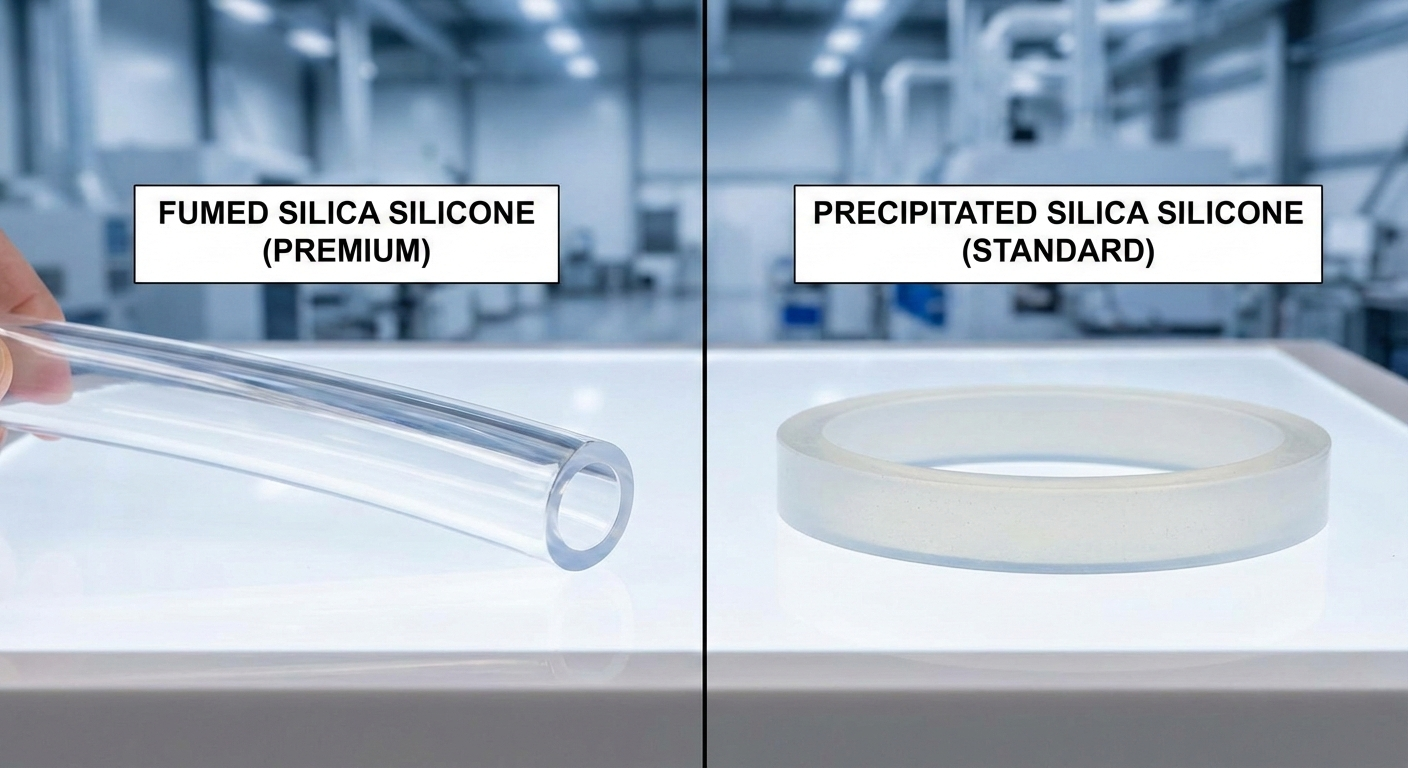
At DX, we don’t believe in one-size-fits-all manufacturing. We understand that the “normal” choice isn’t always the right choice, and the “premium” choice isn’t always necessary for your budget.
Whether you need the rugged, crystal-clear durability of fumed silica for a medical device or a cost-effective solution for a high-volume industrial part, our team ensures the material science matches your mission.
Don’t leave your material selection to chance. Whether you’re in the prototyping phase or looking to optimize an existing production line, DX is here to help you get the chemistry right.
Contact DX’s Engineering Team today for a Material Consultation
DX provides you with all-around silicone product customization services for valued customers like you.